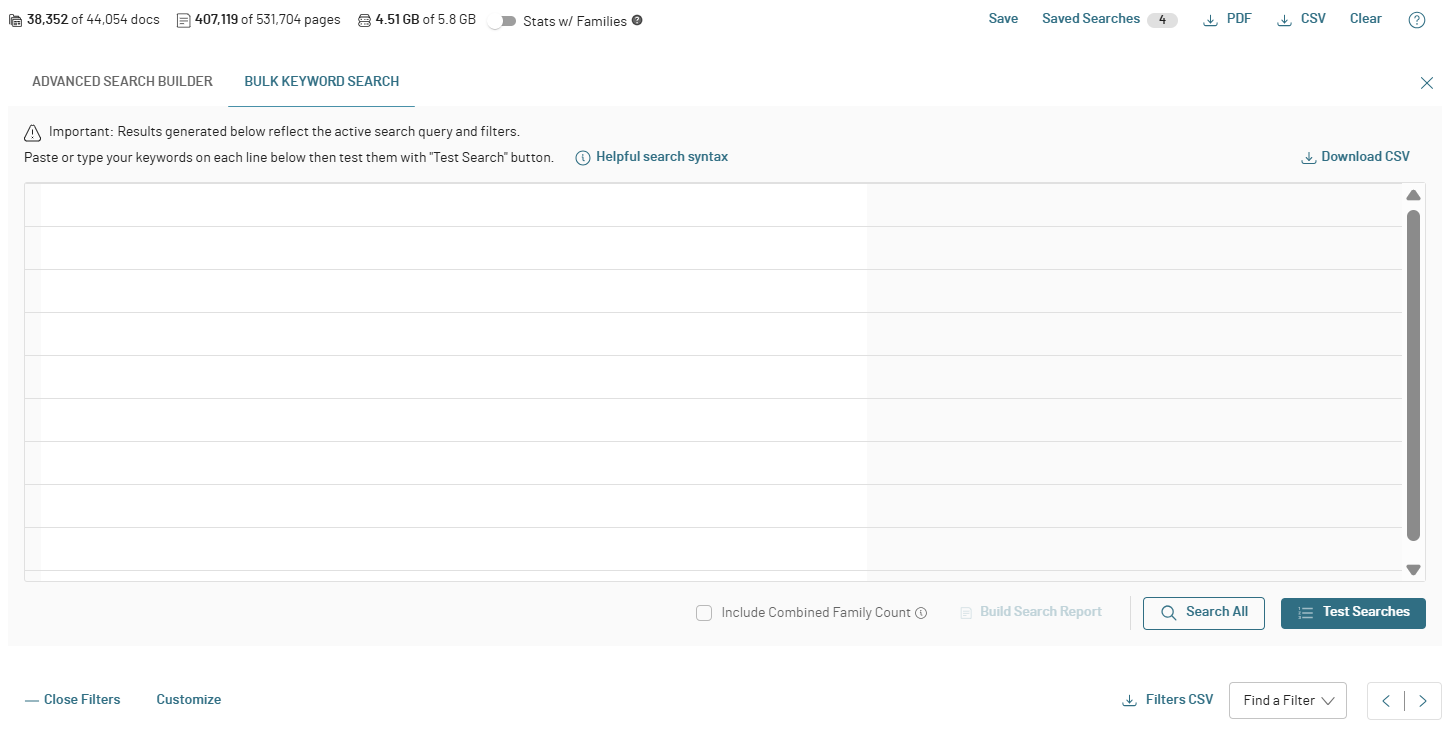
In Logikcull, there are three main ways to search or filter for documents: the Search Bar, the Filter Carousel, and the Search Builder.
Note
See Document Viewer for instructions on how to search within a single document in Logikcull.
Search Bar vs. Filter Carousel vs. Search Builder
The Search Bar, Filter Carousel, and Search Builder aren't built to return the same results. They run searches differently and work together rather than serving as substitutes for each other.
The Search Bar lets you find documents using keywords, Boolean operators, metadata fields, or filter names, and supports advanced techniques like phrases, wildcards, and proximity searches.
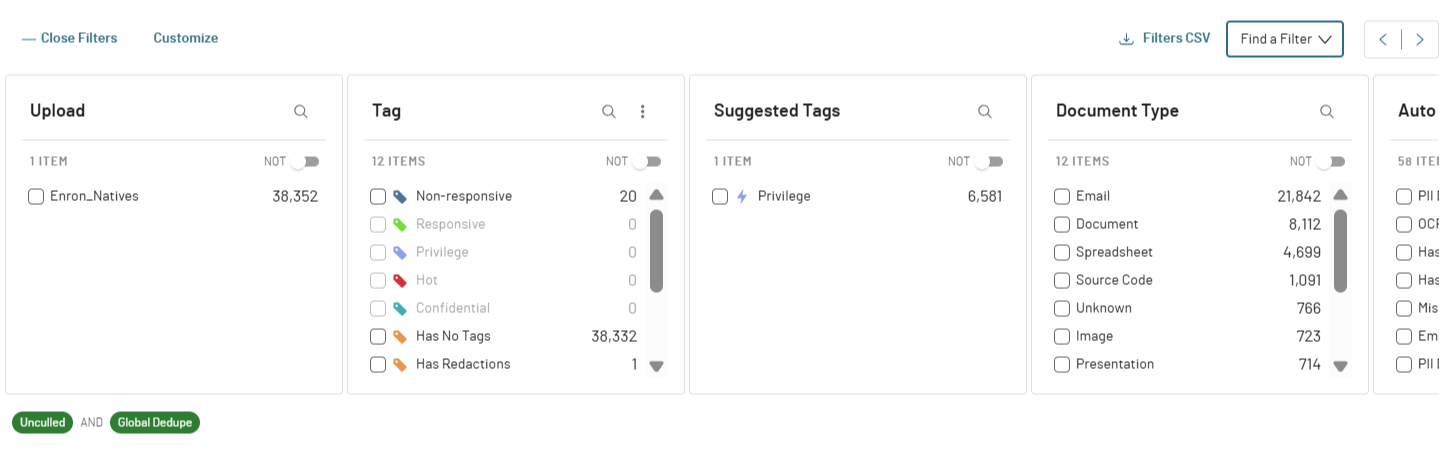
The Filter Carousel gives you a quick, bird's-eye view of your data by narrowing results using specific metadata filters, like document type or tags, automatically updating document counts as you filter.
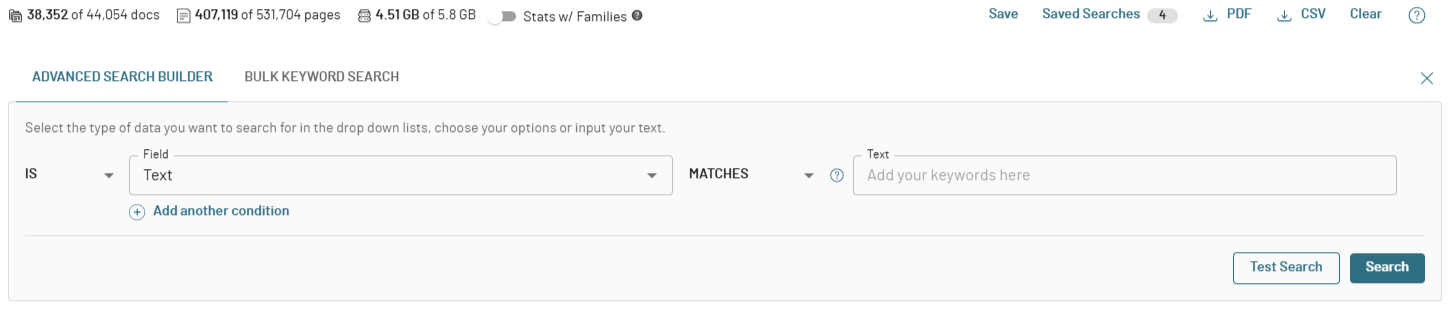
The Search Builder enables creating complex search queries without needing to write syntax, accessible via an advanced interface next to the search button.
Combine the above search methods to create more tailored searches in your dataset. See the below sections for instructions on how to use each search feature:
The Search Bar
Use the Search Bar to find documents with keywords, Boolean operators, metadata fields, or filter names.


Click the question mark icon for quick guidance on using search tips like:
Phrases and Boolean operators
Wildcards and fuzzy searches
Proximity searches
And other advanced techniques
The Filter Carousel
To quickly narrow your results to a specific subset of documents, you can use the Filter Carousel that allows you to filter so you can:
View only certain document types, such as emails
Display documents from a specific upload
The Search Builder
The Search Builder lets you create complex search queries — without needing to write complicated syntax. You can access it by clicking on the magnifying glass over a gear icon located next to the Search button.

This will open first the Advanced Search Builder:
then Bulk Keyword Search to build or upload your query.